

The Science
of Certainty.
In an era of rapid model iteration, speed often sacrifices stability. We choose a different path.
Protocol v4.2 | Validated April 2026
Detailing the hardware and software testing environments used to validate our AI deployment techniques across varied architectural frameworks.
V erification is not a final step; it is the structural integrity of the entire deployment lifecycle. At Poker Verano Digital, we operate under the principle that a technique is only as resilient as the edge cases it survives. Our ML validation framework subjects every architectural strategy to three distinct layers of stress.
Our primary objective is to move beyond synthetic benchmarks. While standard datasets provide a baseline, they rarely reflect the volatile packet Loss, hardware thermal throttling, and memory fragmentation seen in real-world production. We focus on how models behave when the underlying infrastructure is pushed to 95% utilization.
This approach requires a specialized benchmark verification environment. We replicate high-concurrency scenarios where hundreds of inference requests hit the stack simultaneously, testing the auto-scaling triggers and quantization stability of the models we analyze.
Core Metrics
- Inference Latency (p99) <45ms
- Cold Start Delta +/- 2.4s
- Quantization Drift 0.08%
- Memory Overhead 1.12x
The Three Pillars of
Deployment Integrity.
Hardware Sandbox Isolation
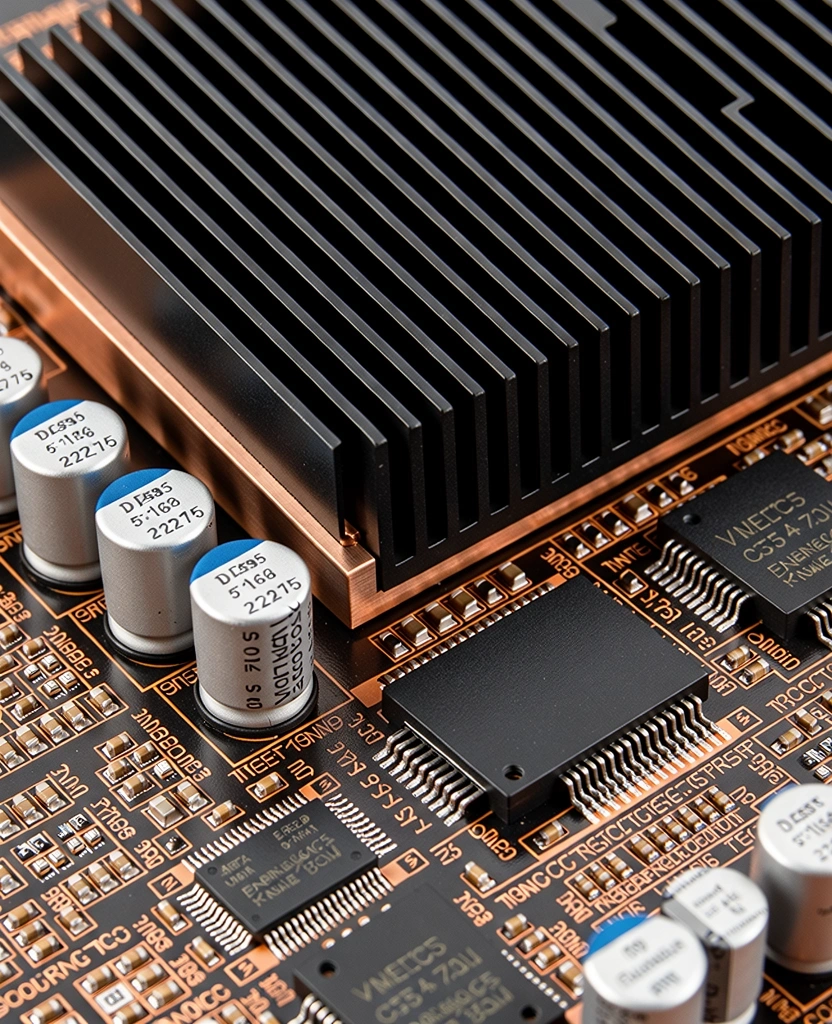
Every deployment technique is tested on bare metal—not just VMs. We use specific ARM64 and x86_64 clusters located in our Kuala Lumpur facility to measure thermal impact and instruction set efficiency. This is where AI testing methodology meets raw physics.
Orchestration Pressure
Stability under Kubernetes churn is paramount. We deliberately inject network latency and node failures into our test environments to observe how model availability behaves during container restarts and service mesh rerouting.
Drift & Precision Audit
Deployment isn't just about speed; it's about output fidelity. We run 10k parallel requests through original and optimized versions of a model to ensure that quantization or pruning has not introduced subtle logic errors.
Our Lab Standards
All tests are recorded and peer-reviewed by our internal technical board before any strategy is published as a Poker Verano standard.
Location: 55 Jalan Gombak, KL
Environment: Isolated Private Cloud
Replicability as a Requirement
A core tenet of our ML validation process is that any engineer should be able to replicate our findings. We avoid using proprietary hardware wrappers that mask the true performance of the models. Instead, we utilize open-source monitoring stacks—Prometheus, Grafana, and Jaeger—to provide a transparent view of the resource lifecycle.
The Hardware Matrix
We maintain a matrix of 14 different GPU/NPU configurations. This variety is necessary because architectural strategies that excel on H100s often fail on localized edge devices. Our verification standards mandate that every deployment strategy must specify its target hardware envelope.
- Standard 1.0: Continuous benchmarking for 72 hours under sustained load to identify memory leaks in the inference engine.
- Standard 2.4: Binary-level comparison of weights pre-and-post optimization to track bit-flip anomalies.
- Standard 3.1: Cross-region latency simulation to verify service-mesh overhead in distributed AI architectures.
Need detailed test logs?
For enterprise partners requiring the full raw datasets of our benchmark runs, please reach out to our technical liaison.
Request Technical Logs
Validated in Kuala Lumpur.
Operations at Poker Verano Digital are conducted at our 55 Jalan Gombak facility. This central hub serves as the testing ground for international deployment standards. By centralizing our hardware resources, we maintain absolute control over environmental variables, ensuring that every result we publish is grounded in repeatable reality.
Ready to explore our findings?
Our verification standards are the foundation for the deployment strategies we share with the global community.